
PIGMENT REMOVAL
TREATMENTS
PIGMENTED LESIONS: AN ANNOYING BLEMISH
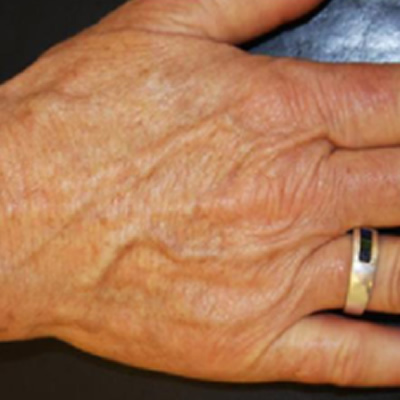
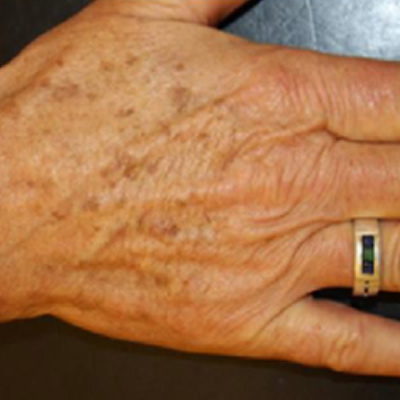
Pigmented lesions, and specifically age spots, are progressively viewed by the people affected as a cosmetic blemish. Age spots happen in half of women and 20% of men over 50 years old. Such signs of skin ageing are progressively being viewed as irritating, the preparation to have these removed privately is developing. There are a wide range of sorts of pigmented lesions, which contrast from each other in a general sense as far as their morphological and histological qualities. For this reason, the evaluation of and possible therapy for pigmented lesions should always be reserved to doctors with specialist knowledge. Benign pigmented lesions, for example, lentigo simplex, lentigo senilis (age and sun spots) and numerous different sorts of sun spots might be treated with laser devices in different ways. Q-Switched lasers produce short light pulses in the nanosecond range, which, thanks to the wavelength, are specifically absorbed by the skin color melanin. The laser treatment itself is uncomplicated and is led on an out-patient premise, with or without a local anaesthetic.
CHOOSING THE RIGHT WAVELENGTH: A DECISIVE FACTOR FOR THE SUCCESS OF THE TREATMENT
The sort of laser is a definitive factor while figuring out which colour pigments might be treated especially well and which hues don’t react to treatment. Ruby lasers, which work in the close infrared range, have ended up being all around universally deployable. Because of the solid absorbtion of the ruby laser shaft by the skin shade melanin, these devices are especially appropriate for the treatment of regular pigmented lesions. Patients generally endure the treatment without any anaesthetic; a local analgesic is only used in very rare cases.
The wavelength of the Ruby or Nd:YAG laser light is particularly absorbed by the colour pigments of the lesion. The energy is exchanged and after that pieces the hued particles from the connective tissue. The divided particles are then degraded epidermally and lymphatically. The irradiated region of skin seems whitish for in the vicinity of ten and twenty minutes quickly after treatment. A slight crust will then form, which will slough off after around one and two weeks. Pigmented lesions may also be treated with utilizing ablative lasers. In this regard, it is important to separate between “cold ablation”, with the Dermablate Erbium:YAG laser for example, and vaporization with the QuadroStarPRO green or yellow light.
FRACTIONAL THERAPY FOR GENTLE TREATMENTS
Such lesions can be treated utilizing the fractional technique. The fractional laser treatment with a Q-Switched laser is one of a kind and permits the treatment of expansive areas, particularly on the face, ensuring safety and comfort to the patient and limiting side effects. The fractional laser treatment permits the specific treatment of just “fractions” of the tissue as a network. This is made possible by splitting the laser beam into a few hundred partial rays. This triggers skin restoration and collagen formation with quick recuperating, which is supported by the untreated skin and therefore includes a generally safe and a low risk of developing side effects.
TREATMENTS FOR A SMOOTHER, CLEAR SKIN
FAQ
Before & After
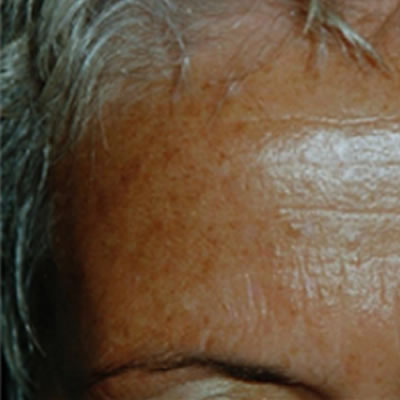
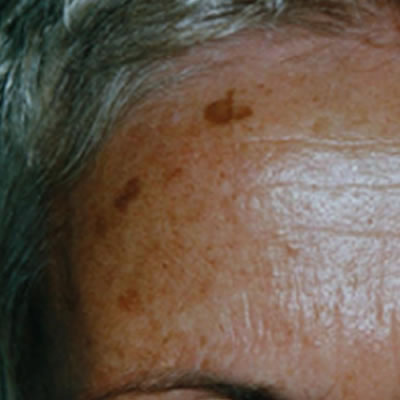
Done with the MeDioStar
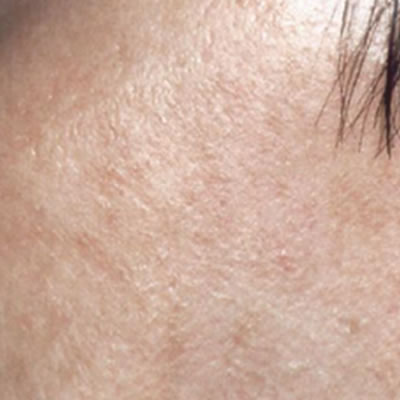
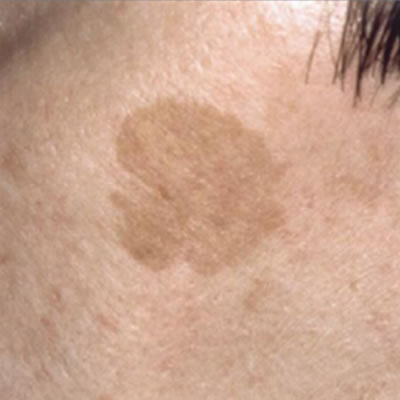
Done with the QuadroStar
Done with the TattooStar